Essex County Prosecutor's Office
The Good Nurse: A True Story of Medicine, Madness, and MurderThe Essex County Prosecutor’s Office is introduced through Tim Braun’s years as a detective in 1990s Newark, where a small homicide unit faces an immense flow of violent cases. The office’s work gives Braun the experience and investigative instincts he later brings to Somerset County, but the stalled murder investigation of nurse Ethel Duryea also reveals how institutional power can narrow what its detectives are allowed to pursue.
Caseload and Working Culture
When Braun joined the office, Newark was described as the country’s most dangerous city and as deeply corrupt. The prosecutor’s office had just ten detectives handling roughly four hundred calls a year. The work was not confined to solving crimes: it shaped a way of life built around loaded guns, expensive suits, bars that stayed open all night, and shifts that ran around the clock. Braun initially found the pace exhilarating, but the constant exposure to violence blurred the boundary between his professional and personal life.
The cases also taught him a grim pattern: in his experience, nearly every hundredth case began with drugs and ended with a gun. Calls to bereaved families brought their own disillusionment; some relatives, after hearing that a child had died, asked about state compensation rather than whether investigators had found the killer. Braun came to see how prolonged exposure to violence could make both victims and families seem less individual to the people responsible for investigating their deaths. The office’s heavy caseload made that emotional distance understandable, but it also left him questioning who counted as a victim and which cases received lasting attention.
The Duryea Investigation
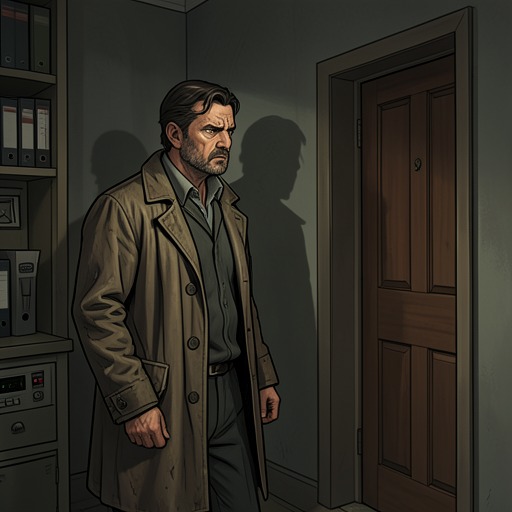
The case of Ethel Duryea became a turning point for Braun. A respected fifty-year-old nurse, she was shot on a sidewalk in an affluent Newark suburb. A jogger found her in the snow, with her purse left untouched. The case began without witnesses, leads, or suspects, and Braun was assigned to investigate what initially appeared to be an unusually difficult street crime.
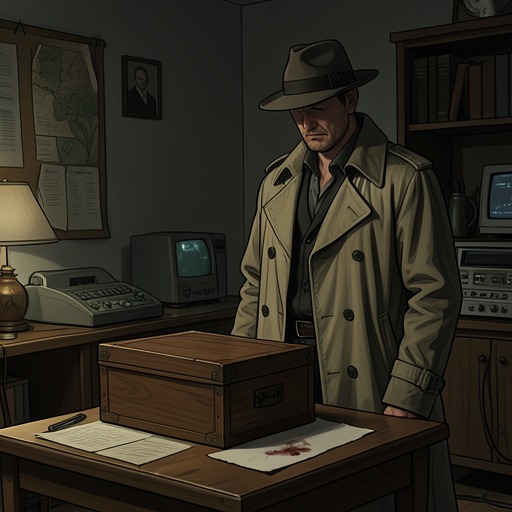
It took him a year to connect the bullet to the gun that fired it, and another six months to link the gun to a multimillion-dollar insurance scheme. The investigation suggested that someone in local emergency rooms had been selling confidential patient information to slip-and-fall lawyers, some of whom had political influence in Newark. Duryea’s murder began to look like a possible hit on a whistleblower, although the evidence did not establish that explanation as fact.
When Braun’s superiors told him to leave the case alone, he continued investigating. The office temporarily moved him out of Homicide and assigned him to courthouse work, a demotion he called the rubber gun squad. He gradually understood that the case was unlikely to be solved through official channels: he could either let the cold case remain cold or risk his pension. Though he had found the gun, the family and the press would not know that, and the killer was not brought to justice in the account presented.
Departure and Institutional Limits
Braun’s attachment to Duryea’s family and his determination to identify her killer made the case more than another file among hundreds. Its suppression forced him to confront a distinction between investigating individual offenders and challenging the machinery that protected influential interests. The office could pursue street crime, but, in Braun’s experience, it would not necessarily pursue a case when doing so threatened that machinery.
The pressure followed him beyond the investigation. Duryea remained in his thoughts, and Braun developed shingles severe enough to cover one side of his body. After years without taking a sick day, he began taking time off and spending it with his family, thinking and praying. He then left Newark for a homicide position in Somerset County, where the work offered better pay, fewer hours, and less danger. At forty-two, he imagined he was slowing down; the unresolved Duryea case, kept in a cardboard box in his closet, remained a measure of what his years in the Essex County Prosecutor’s Office had taught him about the distance between finding an answer and being permitted to act on it.